Backflow incense burners
Why is my backflow incense not working? A fix-it checklist
Smoke going up instead of down? The usual causes are draughts, the wrong cones, damp cones or a blocked hole. Work through this checklist to fix it.
If your backflow incense smoke is going up instead of down, the cause is almost always one of five things: moving air in the room, the wrong type of cone, a damp cone, a blocked or misaligned hole, or the way it was lit. Most of these take seconds to fix. Work through the checklist below in order, because the first two cover most cases.
First, a quick bit of how it works
A backflow cone has a hollow channel running up through its middle, with a hole in the base. As the cone smoulders, smoke is drawn down through that channel. By the time it comes out of the bottom, it has cooled a little and is carrying a lot of particles, so it is denser than the air around it. Denser smoke sinks, and that's what gives you the waterfall effect.
Anything that warms the smoke, stirs the air, or stops smoke getting into the channel will break that effect. If you want the longer version, read how backflow incense works.
The checklist
1. Is there a draught?
This is the big one. Backflow smoke is only slightly heavier than the air around it, so even a gentle air current will pull it sideways or lift it.
Look for:
- open windows or doors, even across the room
- a fan, air purifier or extractor running
- a radiator, heater or log burner nearby (warm air rises and carries the smoke up with it)
- people walking past regularly
- the burner sitting under an air vent or in a hallway
Move the burner to a still corner, away from heat. A shelf with a wall behind it often works better than a coffee table in the middle of the room. You still want the room ventilated, so open a window afterwards or in another room rather than right next to the burner.
2. Is it actually a backflow cone?
Turn the cone over. A backflow cone has a clear hole in the base that runs up inside it. A standard incense cone is solid all the way through.
Standard cones will burn on a backflow burner, but the smoke will rise like normal incense. No amount of positioning will change that. If you're not sure what you've got, our guide to backflow vs normal incense cones shows how to tell them apart.
3. Is the cone dry?
Incense cones soak up moisture from the air. A damp cone burns unevenly, goes out halfway, or produces thin smoke that doesn't hold together.
Store cones in a sealed box or tin in a dry cupboard, not a steamy bathroom or kitchen windowsill. If a cone feels soft or has been left out for weeks, try a fresh one from a sealed packet.
4. Is the hole lined up and clear?
The hole in the bottom of the cone needs to sit directly over the hole in the burner. If it's off to one side, the smoke has nowhere to go, so it escapes up and out.
Then check the burner's hole and channels. Residue from old cones builds up over time and can partly block them. Ash or a broken bit of old cone can also fall in. Clear it gently with a cotton bud or pipe cleaner. Our guide on how to clean a backflow incense burner covers this properly.
5. Did you light it the right way?
You want the cone to smoulder, not burn with a flame.
- Hold a lighter or match to the tip until it catches.
- Let it burn with a flame for a few seconds.
- Blow it out gently. The tip should glow orange and give off smoke.
If you leave the flame going too long, the cone can burn too hot and too fast. If you blow too hard, you might put it out completely. If the tip isn't glowing, light it again.
Also, give it a moment. The smoke usually starts flowing down once the burn reaches the hollow part of the cone. That's often a minute or two in. Some smoke rising from the very tip is normal throughout.
6. Is the room too warm?
In a very warm room, the smoke doesn't cool as much on its way down the channel, so it's closer to the temperature of the surrounding air and has less reason to sink. You'll often see a weaker flow in summer or right next to a heater. A cooler spot in the room can make a real difference.
7. Is the cone too big or too small for the burner?
Some burners have a small cup or flower for the cone to sit in. If the cone is too wide, it might not sit flat, which breaks the seal over the hole. If it's very small, it can slip off-centre. Jumbo cones look great on large burners but may not suit small ones.
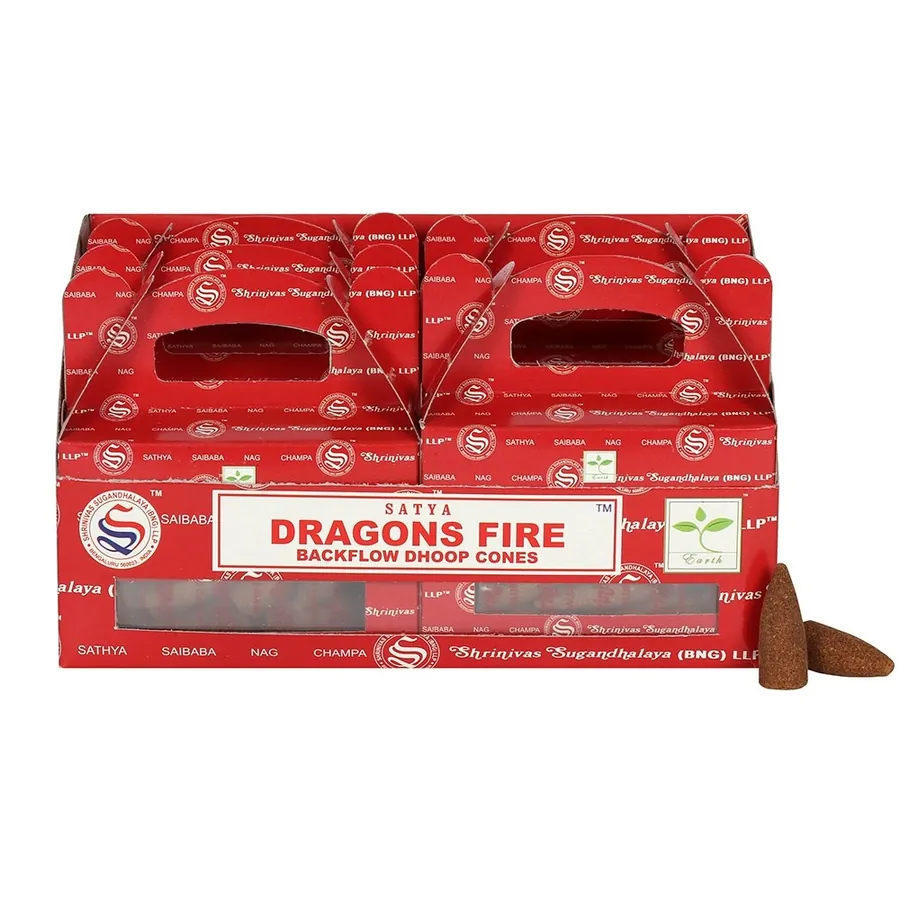
Satya Dragons Fire Backflow Cones, 6 Packs
A display box of 6 packs of Satya Dragons Fire backflow dhoop cones, made in India, for backflow incense burners.
£22.99
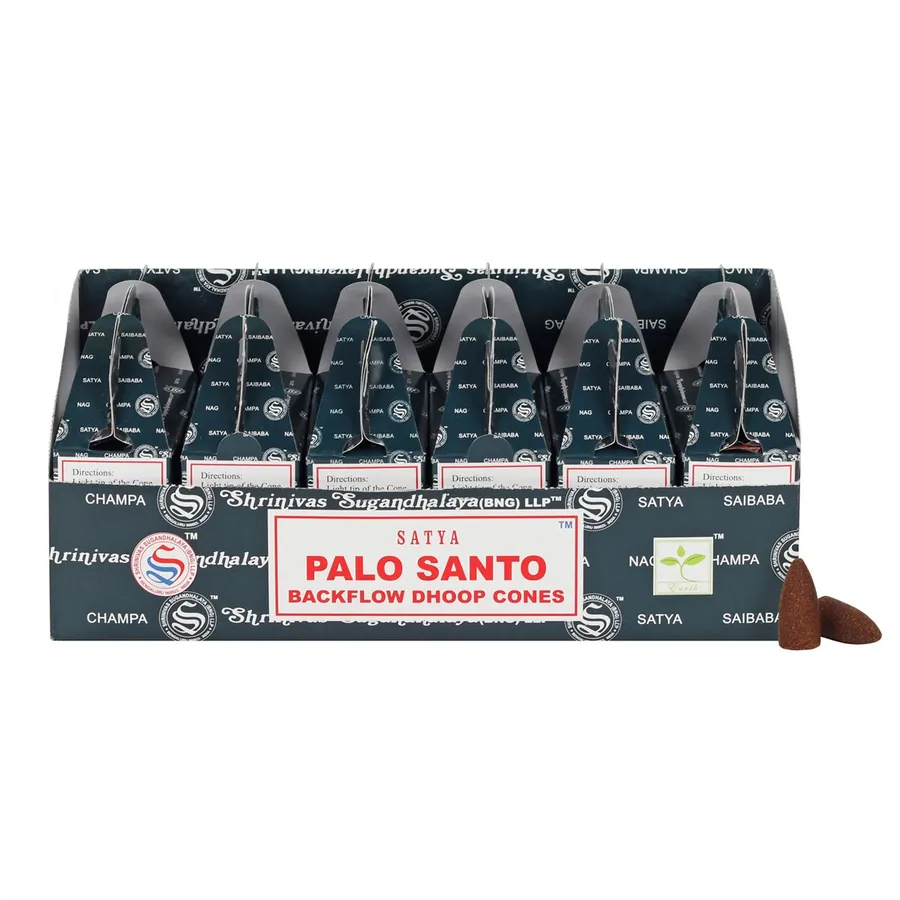
Satya Palo Santo Backflow Cones, 6 Packs
A display box of 6 packs of Satya Palo Santo backflow dhoop cones, made in India, for use in a backflow incense burner.
£23.99
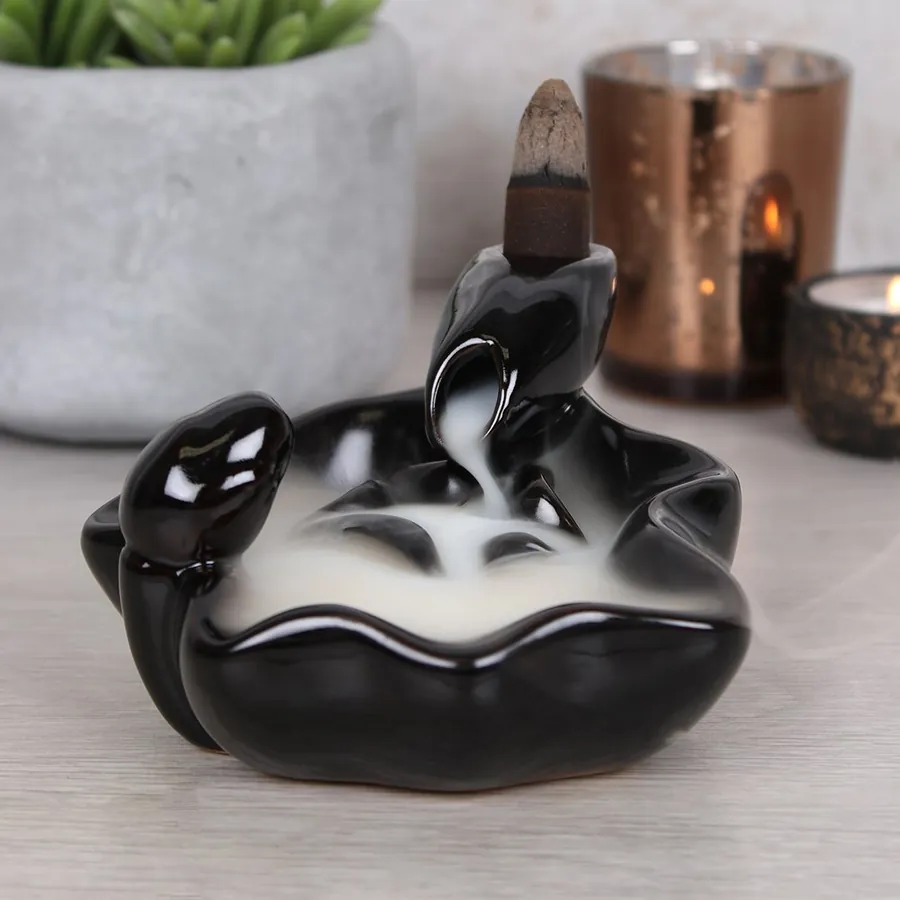
Pool to Pool Backflow Incense Burner
A simple, low black burner. Smoke pours into a small pool, then spills over into a larger one.
£7.99
"My backflow incense is smoking from the top"
A bit of smoke from the top is expected. The burning tip always gives off some rising smoke, especially at the start. What you're looking for is most of the smoke going down once it's established.
If nearly all of it is going up, run through the checklist again, starting with draughts and the cone type. Those two account for most problems.
"It worked once, then stopped"
This usually points to one of three things:
- Residue build-up. After a few weeks of use, the channels get sticky and narrower. Clean the burner.
- A different batch of cones. Some brands and scents flow better than others. If you've changed cones, try your old ones again.
- A change in the room. Heating coming on in autumn is a common one. So is moving the burner to a new spot.
Getting the best flow: a short routine
- Put the burner on a stable, heat-resistant surface in a still part of the room, away from heaters.
- Check the hole in the burner is clear.
- Take a dry backflow cone and sit it centred over the hole.
- Light the tip, let it flame for a few seconds, then blow it out.
- Leave it alone and watch. Don't wave your hand near it to check.
- Stay in the room while it burns. Never leave incense unattended.
A single cone typically burns for around 10–15 minutes, depending on size and brand. Larger jumbo cones last longer.
Still not working?
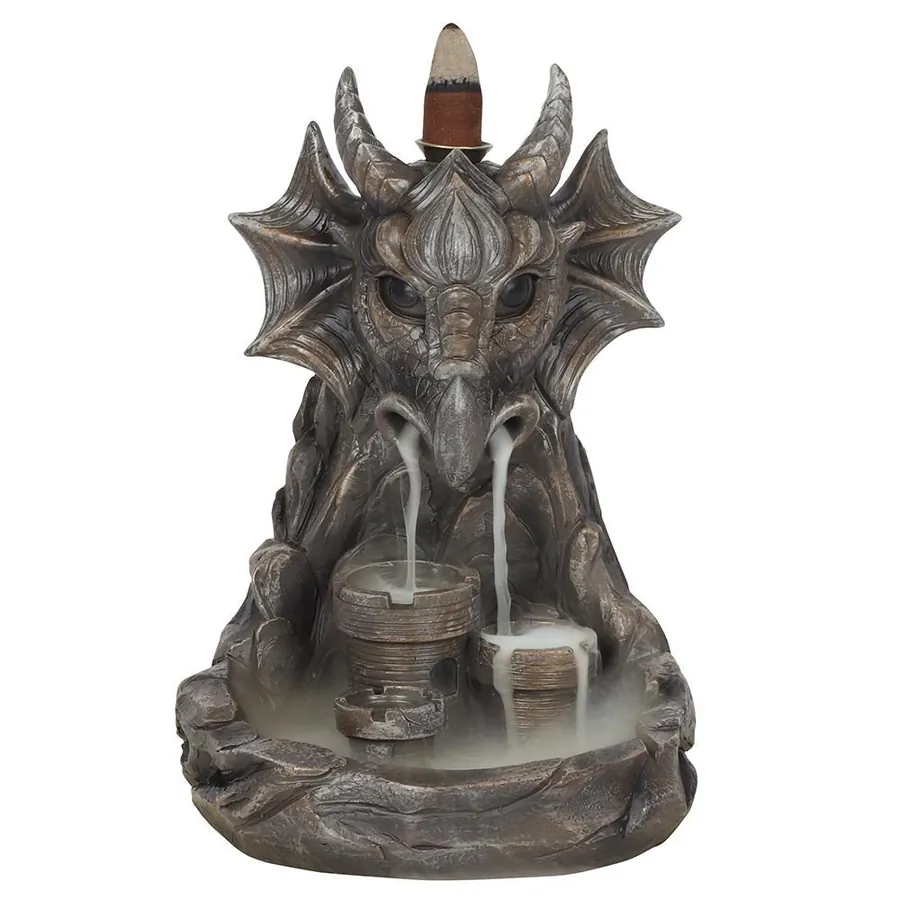
If you've tried fresh backflow cones, a clean burner and a still corner, and the smoke still won't flow, the burner itself may be the problem. Some designs have very short drops or wide openings that make the effect hard to see. Taller burners with a longer fall tend to show the effect more clearly.
Our step-by-step guide to using a backflow incense burner covers setup and positioning in more detail. You can also browse our backflow incense burners and backflow cones. Everything ships from a UK warehouse; see delivery for timings and returns if something isn't right.
A note on safety
Incense produces smoke and fine particles. Burn it in a ventilated room, keep it away from children and pets, and never leave it burning unattended. Our guide on whether backflow incense is safe goes into this in more detail.
Questions people ask
Why is my backflow incense smoke going up?
The most common reasons are a draught or warm air moving through the room, using a standard solid cone instead of a backflow cone, a damp cone, or a blocked hole in the burner. A little smoke rising from the tip is normal, especially in the first minute or two before the burn reaches the hollow channel.
Why isn't my backflow incense cone working at all?
Check the cone has a hole in its base. If it doesn't, it's a normal cone and won't flow down. If it does, make sure the hole sits directly over the hole in the burner, the cone is dry, and you blew out the flame so it smoulders rather than burns.
Why does my backflow incense burner stink?
Over time, sticky residue builds up in the channels and on the surface of the burner. Old residue can smell stale or burnt when it warms up. A regular clean usually sorts it out. See our cleaning guide for how to do it without damaging the finish.
How long does it take for backflow incense to work?
Usually not long. The smoke tends to start flowing down once the burn reaches the hollow part of the cone, which is often a minute or two after you blow out the flame. If nothing has changed after a few minutes, work through the checklist in this guide.